What Temperature Is a Fever? Normal Ranges by Ear, Forehead, Mouth and Armpit

Quick answer: A fever is a temperature above the normal range for the place you measured. For children, the Canadian Paediatric Society puts that line at 37.9 °C (100.2 °F) in the ear or rectum, and 37.5 °C (99.5 °F) in the mouth or armpit. A forehead reading has no single official cut-off, so use the range in your thermometer's manual.
Most of us grew up with one magic number: 37 °C. Anything above it meant a day home from school. The trouble is that body temperature isn't one number. It moves through the day, it's a little different in every person, and it depends a lot on where the thermometer is pointed. A reading of 37.8 °C can be a fever in the armpit and perfectly normal in the ear.
So before you decide whether that number on the screen is worth worrying about, it helps to know which range it belongs to.
What is a normal body temperature?
Normal body temperature is a range, not a point. It tends to be lowest early in the morning and highest in the late afternoon, and young children often run a little warmer than adults. That's why every reliable guide gives a range for each measuring site rather than one figure.
Fever temperature by measuring site
These are the ranges the Canadian Paediatric Society (CPS) uses for children. Anything above the normal range counts as a fever.
| Where you measure | Normal range | Fever is above |
|---|---|---|
| Rectum | 36.6–37.9 °C (97.9–100.2 °F) | 37.9 °C (100.2 °F) |
| Ear | 35.8–37.9 °C (96.4–100.2 °F) | 37.9 °C (100.2 °F) |
| Mouth | 35.5–37.5 °C (95.9–99.5 °F) | 37.5 °C (99.5 °F) |
| Armpit | 36.5–37.5 °C (97.8–99.5 °F) | 37.5 °C (99.5 °F) |
Source: Canadian Paediatric Society, Fever and temperature taking.
You'll notice the numbers don't line up perfectly from one source to the next. Thermometer manuals, including ours, sometimes list slightly different ranges because they're written for that device. When you're using a particular thermometer, its manual is the best guide to what its readings mean.
What about forehead temperature?
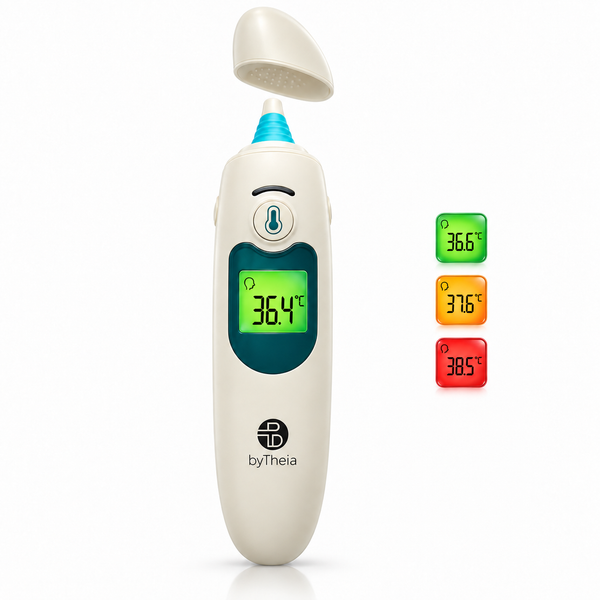
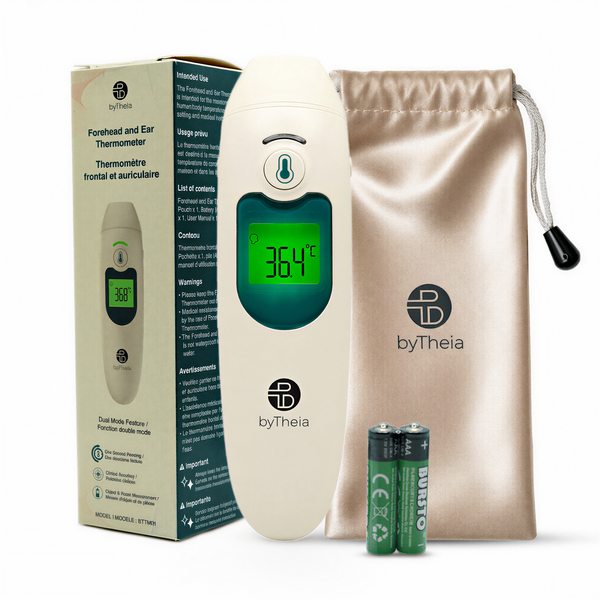
The CPS doesn't publish a forehead range. Forehead readings are affected by things that don't touch an ear or a mouth: sweat, hair, a hat that just came off, a cold walk home. The manual for our digital ear and forehead thermometer lists a normal forehead range of 36.1–37.5 °C (97.0–99.5 °F) and describes a forehead reading as "indicative", meaning it can differ from core body temperature by up to 0.5 °C.
In practice, that makes the forehead a good place for a quick check and the ear a better place to confirm. We cover the trade-off in detail in Ear vs forehead thermometer: which is more accurate?
Can you tell if someone has a fever without a thermometer?
Not reliably. A hand on the forehead is the oldest test there is, and the CPS says plainly that it isn't a reliable way to check for fever. Flushed cheeks, glassy eyes and a hot back can all point that way, but so can a warm bath or a toddler who has just been running laps around the kitchen. If you need to know, measure.
When should you call a doctor about a fever?
The number matters, but how the person looks and acts matters more. The CPS advice for children:
- Under 6 months with a fever: see a doctor.
- Under 3 months with a fever: get seen urgently.
- Older children: see a doctor if the fever lasts more than 48 to 72 hours.
- Any age: contact a healthcare provider if a child is unusually cranky or fussy, very sleepy or hard to wake, keeps wheezing or coughing, or has a fever with a rash or other worrying signs.
For adults, the warning signs are similar. Seek advice promptly if a rising temperature comes with a stiff neck, confusion, trouble breathing, a seizure or signs of dehydration. Older adults deserve extra attention, because fever can be muted or even absent in people over 60.
How to get a reading you can trust
- Use the right site for the age. Our guide to the best thermometer for each age walks through the CPS recommendations.
- Let things settle. Wait 20 to 30 minutes after a bath, exercise, a hot drink or coming in from the cold.
- Measure the same way every time. Same site, same ear. Comparing an armpit reading at noon with an ear reading at 6 p.m. tells you very little.
- Write it down. A thermometer with memory helps, but a note on your phone works too. The trend over a few hours is often more useful than any single number.
Frequently asked questions
Is 37.5 °C a fever?
It depends on where you measured. In the mouth or armpit, the CPS treats anything above 37.5 °C as a fever. In the ear or rectum, 37.5 °C is within the normal range.
Is 38 °C a high fever?
38 °C is a fever at every measuring site, but it isn't usually called high. For a baby under 6 months, any fever is a reason to see a doctor. For older children and adults, how they're acting matters more than the exact number.
Why does my child's temperature go up at night?
Body temperature naturally rises in the late afternoon and evening, and fevers often follow the same pattern. A higher reading at bedtime doesn't necessarily mean things are getting worse; watch the overall trend and how your child seems.
Should I convert my reading to Fahrenheit?
Only if the advice you're following uses Fahrenheit. Our body temperature chart converts every reading from 35 to 42 °C.
Related reading
This article is general information, not medical advice. A thermometer reading is not a diagnosis. If you're worried about a fever or how someone is acting, contact a healthcare professional or call 811 where available.
Written by the byTheia team · Last updated October 2026 · Sources: Canadian Paediatric Society; byTheia thermometer user manual.